


For school administrators, selecting school chairs is a strategic decision that extends beyond procurement, as it directly impacts student well-being and the learning environment.
Various school chair types influence student comfort, posture, and focus—playing a crucial role in their well-being and concentration. Therefore, selecting the right seating is fundamental to an optimal learning environment.
This guide provides a structured framework to help you evaluate chair types, align purchases with educational goals, and make cost-effective decisions. We’ll explore various options, such as student chairs with writing pads and kindergarten chairs, and compare their impact on students to detail critical selection criteria for a sound investment.
How School Chairs Influence the Modern Learning Environment
Ergonomics plays a significant role in student well-being and productivity, as it guarantees comfort and focus during long learning sessions.
When students sit on poorly designed classroom chairs for extended durations, they risk developing:
- Discomfort
- Fatigue
- Musculoskeletal issues
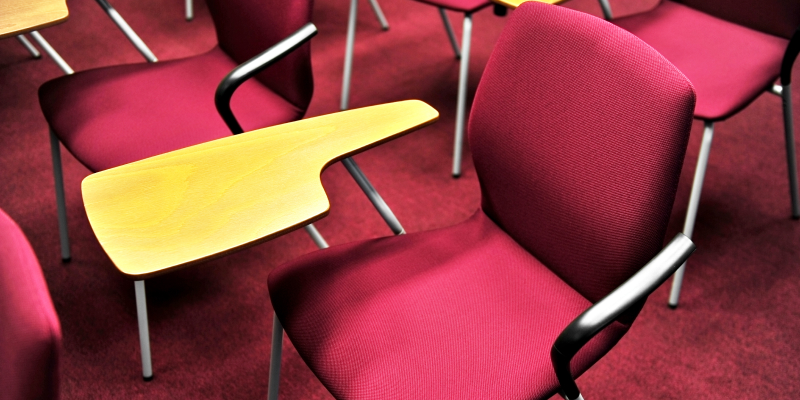
Conversely, chairs with adequate support promote proper posture and allow students to focus on their classes and bond with their educational experience. For example, some chairs are designed with a contoured backrest that follows the spine’s natural curve, offering essential comfort and support during long school days.
These flexible seating options:
- Transform students from passive listeners into active participants.
- Facilitate active learning by enabling reconfiguration for group activities.
- Allow for the easy rearrangement of spaces to integrate/incorporate dynamic teaching methods.
Furthermore, the aesthetics and visual appeal of school chairs have a significant impact on the classroom atmosphere, as vibrant colours can breathe life into a room and serve as a guiding principle in creating an inviting space.
Selecting the right furniture requires careful thought. Choices must be aligned with:
- Specific age groups
- Learning environments
- Teaching methods
Therefore, your decision must be deliberate to ensure full compatibility.
With these critical impacts in mind, it becomes essential to compare primary chair categories to see how each aligns with your school’s unique goals—our next area of focus.
School Chair Types for Your Institution
When evaluating school chair types, you’ll typically encounter three core categories:
1. Traditional
Traditional student classroom chairs are the go-to option for many schools, offering simplicity and functionality. While they may lack advanced features, you’ll find them both cost-effective and highly durable.
However, they often provide limited ergonomic support during prolonged sitting—a critical factor for student health. Furthermore, their fixed, bulky configurations hinder collaborative learning by restricting classroom reconfiguration.
2. Ergonomic
In contrast to traditional chairs, ergonomic school chairs represent a health-focused investment addressing posture and well-being. They adjust to accommodate various body sizes, actively promoting good posture and reducing musculoskeletal discomfort.
However, these benefits come with a higher initial investment per unit, and mechanical components may require maintenance over time.
3. Flexible Seating
Flexible or modular seating creates a relaxed, engaging environment that encourages movement. This approach empowers students to choose comfortable positions, directly enabling collaborative learning through dynamic setups. While beneficial for engagement, this movement can distract others if not managed effectively.
Beyond these primary categories, specialised school chair types address functional needs like space optimisation or integrated work surfaces—which we’ll explore next.
Also Read: Elevate Learning Experience With Ergonomic Classroom Chairs
Exploring Specialised School Chair Options
When selecting school chairs, you’ll find many chosen for specific purposes, addressing the unique requirements of different learning environments. Here are three functional options to consider:
1. Chairs With Writing Pads
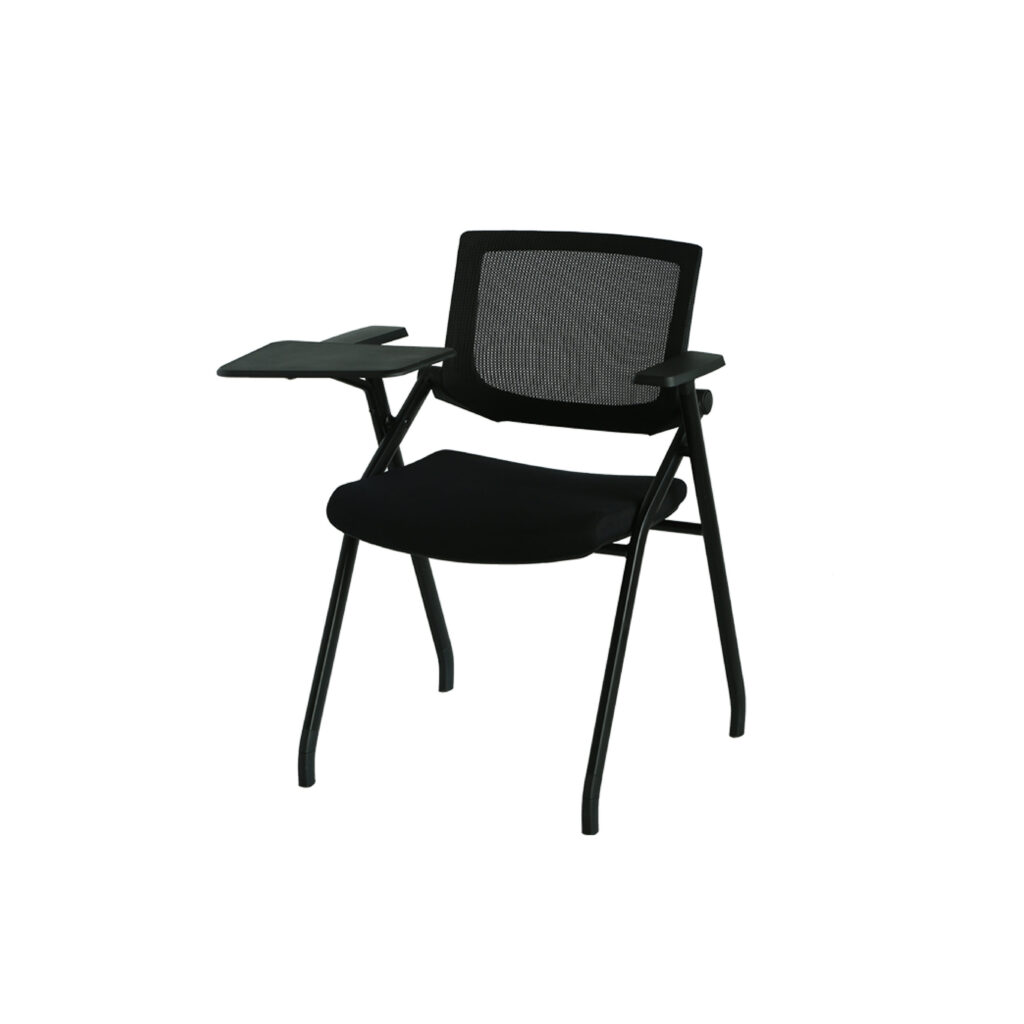
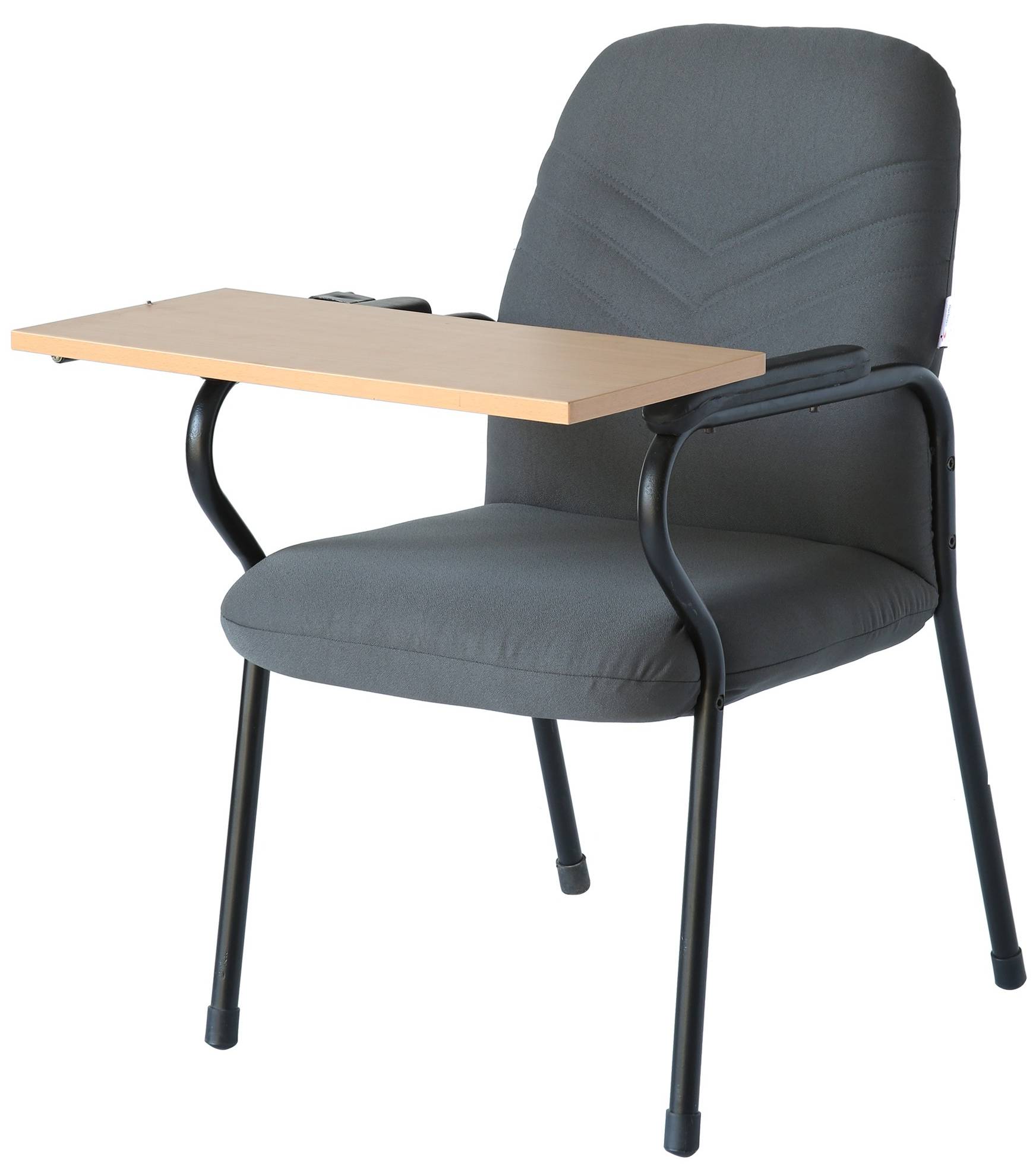
For rooms where individual desks aren’t practical, combo desk chairs offer a built-in solution. Featuring a writing pad or tablet arm, they provide students with a personal surface for note-taking.
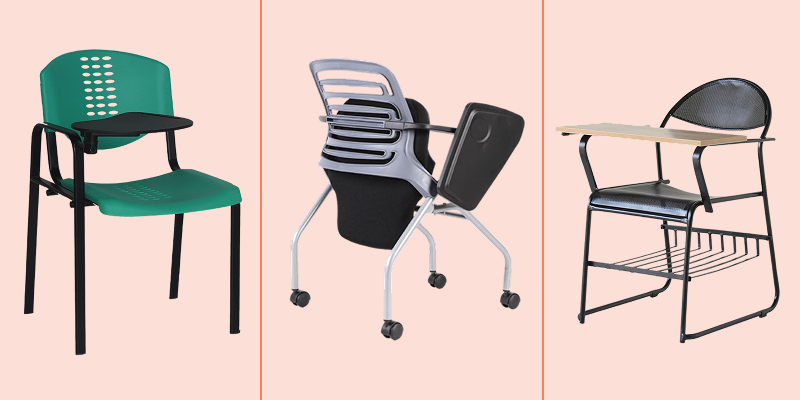
Inspace offers:
- Writing Pad Chair – Poly HP: This chair comes with an ABS half writing pad, a polypropylene sheet fitted over a powder-coated, black shade MS tubular understructure. It is an ideal option for young students.
- Writing Pad Chair – Stacky HP: This seating option is fitted with an ABS backrest frame and a half writing pad, a PU moulded foam seat, and fabric upholstered with an ABS cover. The handles are made of nylon. An MS tubular understructure and powder-coated wheels uphold the chair. The wheels provide mobility, allowing the chair to be effortlessly moved to any area within the school and adaptable for various layouts.
- Writing Pad Chair – Perfo FP: This school chair is both ergonomic and space-saving. The powder-coated, black-coloured chair is fitted with an 18 mm full writing pad and a perforated MS sheet of 1.2 mm thickness. The chair rests on a sturdy MS tubular frame and has armrests for extra convenience. Its best feature is a bottom book rack big enough to hold several books and other school supplies.
2. Auditorium and Lecture Hall Seating
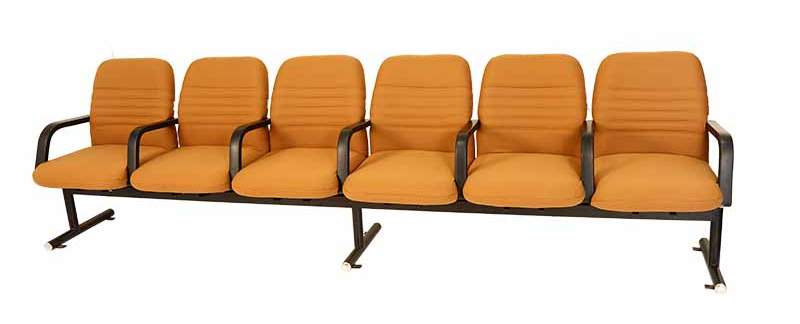
These chairs are perfectly designed for larger groups in auditoriums/lecture halls. Built for lasting comfort and stability, their heavy-duty mild steel frames are securely grounded to the floor.
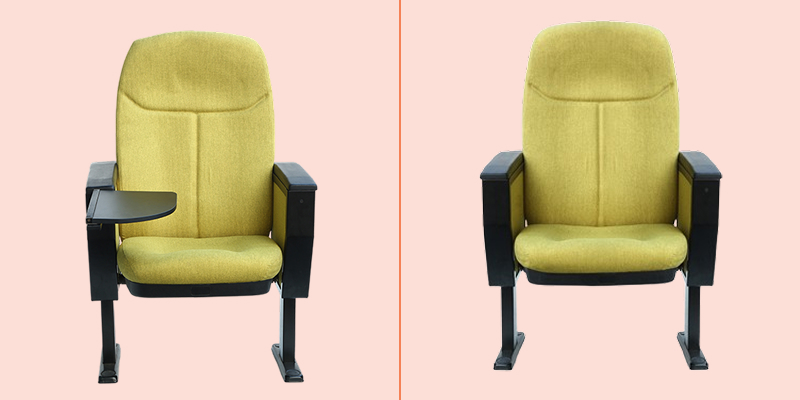
Inspace offers:
- Auditorium Chair – Luxury Audi: This chair, provisioned for floor grounding, is fitted on a heavy-duty, powder-coated MS frame understructure. The seat and backrest are 40-density PU moulded foam with fabric/leatherite upholstery. The seat also has a collapsable half-writing pad.
- Auditorium Chair – Tablet Audi: This auditorium chair is a similar version of the Luxury Audi. However, it comes without a writing pad.
3. Kindergarten Chairs
Designed with the youngest learners in mind, these chairs help create a welcoming and engaging atmosphere. You’ll appreciate their durable, age-appropriate, and safe designs. Available in vibrant colours, they are built to support “play-based learning” and make little ones feel comfortable in their first classroom.
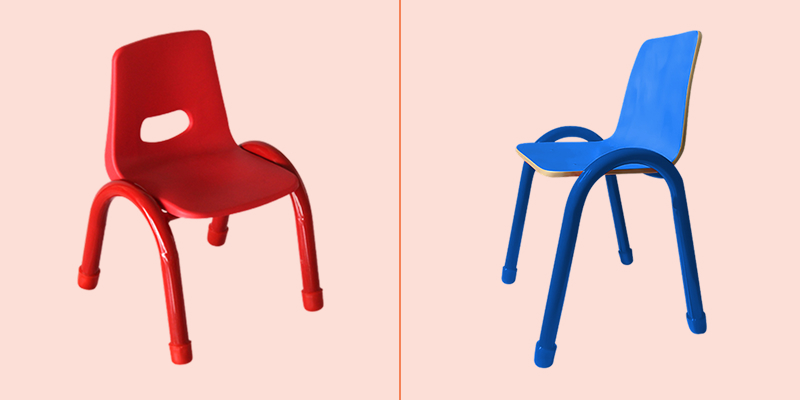
Inspace offers:
- KG – Chair – Mickey: This cute chair is created from a single moulded PP shell and measures 300 mm from the floor up—making it perfect for kindergarten students. The shell is mounted on thick CR tubes made from mild steel, featuring a powder-coated finish for added durability. The chairs are available in red/green/blue/yellow colours to brighten your kindergarten space.
- KG – Chair – Snow: This chair is single moulded and laminated on both sides. The understructure is made from thick mild steel CR tubes and powder-coated. It is available in four colour options—red/blue/green/yellow.
While understanding these specialised school chair types is essential, your final decision depends on careful evaluation of several critical factors—which we’ll unpack next.
Key Factors for Evaluating and Selecting School Chairs
To effectively evaluate the different school chair types, a structured checklist is essential for making a sound, long-term investment:
- Prioritise durability and maintenance. Opt for school chairs that are constructed with robust materials—such as polypropylene and powder-coated metal—as ease of cleaning and the availability of replaceable parts directly influence your long-term ROI.
- Make sure to choose “age-appropriate” chairs—as this can make a big difference in a student’s learning experience. The right chair assists students in sitting comfortably and focusing on their studies.
- Assess the flexibility and pedagogical alignment of the chairs. Consult with teaching staff to determine if the selected school chairs support their school’s learning methods, such as collaborative group work or dynamic activities.
- Choose chairs with stable designs, rounded edges, and non-toxic materials to prevent accidents and ensure a secure environment.
- Consider the way the design represents/reflects your school’s institutional identity. Make sure your selection is in line with your school’s branding and allows for future scalability—which supports long-term planning.
With careful consideration/evaluation of these factors, you can make a balanced, informed choice that fosters a supportive learning environment for years to come.
Investing in Future-Proof Furniture for Your School
Remember, choosing the right school chairs creates an optimal learning environment, significantly impacting student well-being and focus. By understanding the various school chair types and evaluation criteria, you can make an informed decision that transforms classrooms into dynamic spaces.
Ultimately, selecting school chairs is a strategic process balancing:
- Procurement efficiency
- Ergonomic support
- Modern pedagogy
This thoughtful approach future-proofs your investment, ensuring a higher long-term ROI and a continuously improved learning environment.
As leading school furniture manufacturers in Chennai, Inspace School Furniture invites you to partner in creating inspiring learning spaces—explore our tailored solutions today!